




Surface Laptop Ultra: Microsoft omits test methodology in MacBook Pro comparison
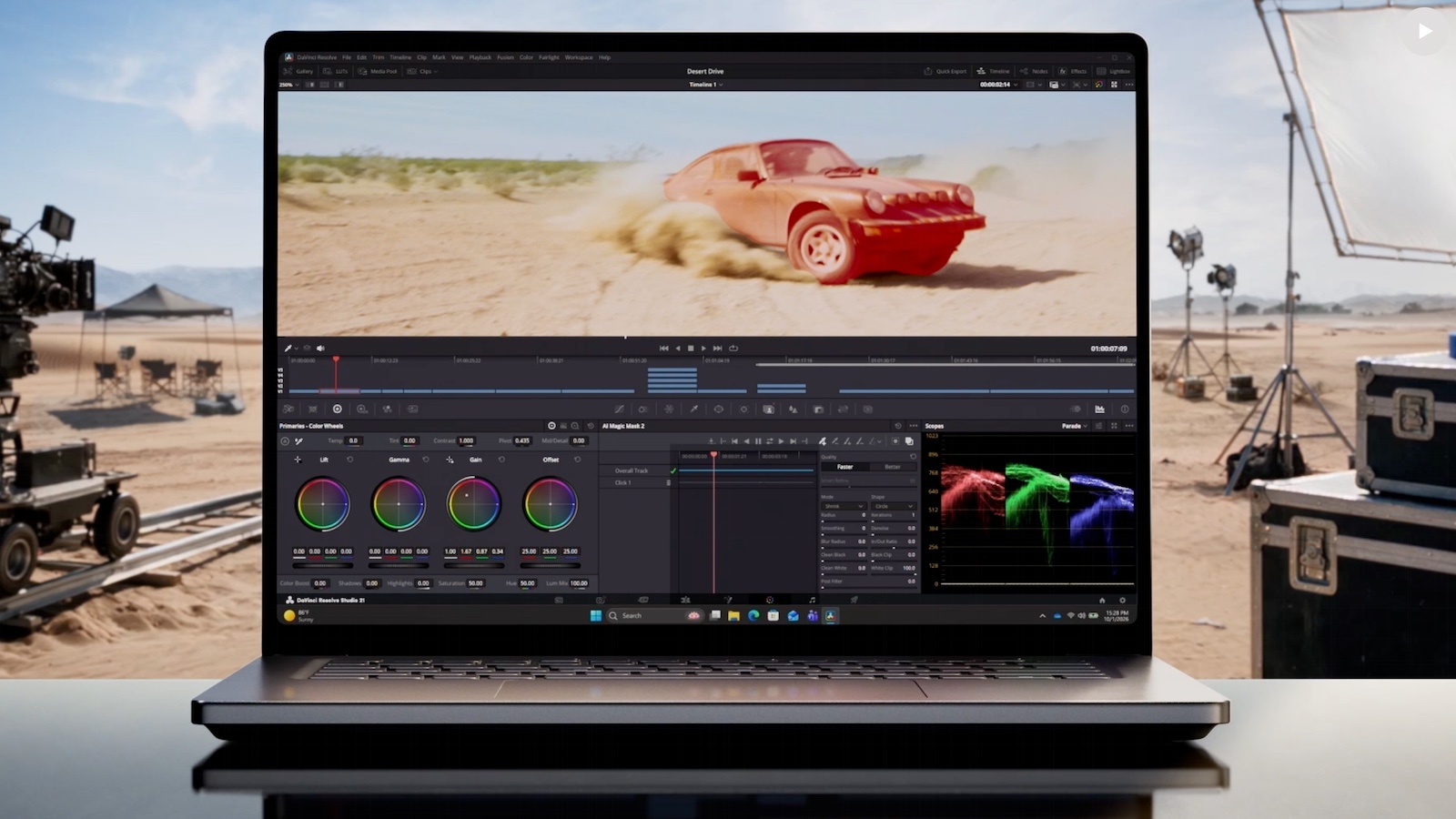
Microsoft announced more than pricing and a release date for the Surface Laptop Ultra on Wednesday. It also named a rival. The 15-inch laptop is claimed to deliver responses from locally run AI models twice as fast as a comparable M5-generation MacBook Pro and generate videos six times faster. Bloomberg reported the figures from the presentation, but Microsoft has yet to provide supporting details.
Twice as fast at what, exactly? The product page has no footnote explaining the comparison with Apple. Microsoft clearly describes how it measured battery life and the display's 2,000-nit peak brightness. But it does not identify the MacBook configuration, AI model or software used to produce the "twice as fast" result. The Next Web highlighted the omission.
Why the lead is plausible but still says little
The comparison is unlikely to be baseless. The Surface Laptop Ultra uses Nvidia's RTX Spark, combining a Grace CPU with up to 20 cores and a Blackwell GPU that share up to 128 GB of memory. CUDA is another factor. Microsoft specifically promotes local agents running models with up to 120 billion parameters, and many AI tools are built for Nvidia's software first. That gives Nvidia an advantage Apple has to counter with its own frameworks.
Outside AI, earlier comparisons told a different story. Results from June for the technically almost identical DGX Spark put the chip far behind Apple's M5 Max, while Notebookcheck's GPU analysis places the M5 Max on par with a GeForce RTX 5070. A twofold lead in a selected task could therefore be accurate without making the Surface faster overall than a 16-inch MacBook Pro with an M5 Pro. That is precisely why the methodology would be more revealing than the number.
Pricing and trade-in incentives also target Apple
The Surface Laptop Ultra starts at $400 below the cheapest 16-inch MacBook Pro. Microsoft's US website also advertises "Break up with your MacBook" and offers up to $1,000 for a trade-in, though the offer is limited to the US. The base model has 18 CPU cores, 24 GB of RAM and a 512 GB SSD, with US pricing starting at $2,600 and shipments beginning October 16.
The main news is that users who need Windows and want to run local models with CUDA now have a slim laptop built for that niche. Whether it actually delivers twice the MacBook Pro's AI performance will take an independent test to establish. A slide in San Francisco is arguably not enough.
Source(s)
 Add as a preferred source on Google


